

Auctions in Southwest Louisiana: How They Work & Why You Win
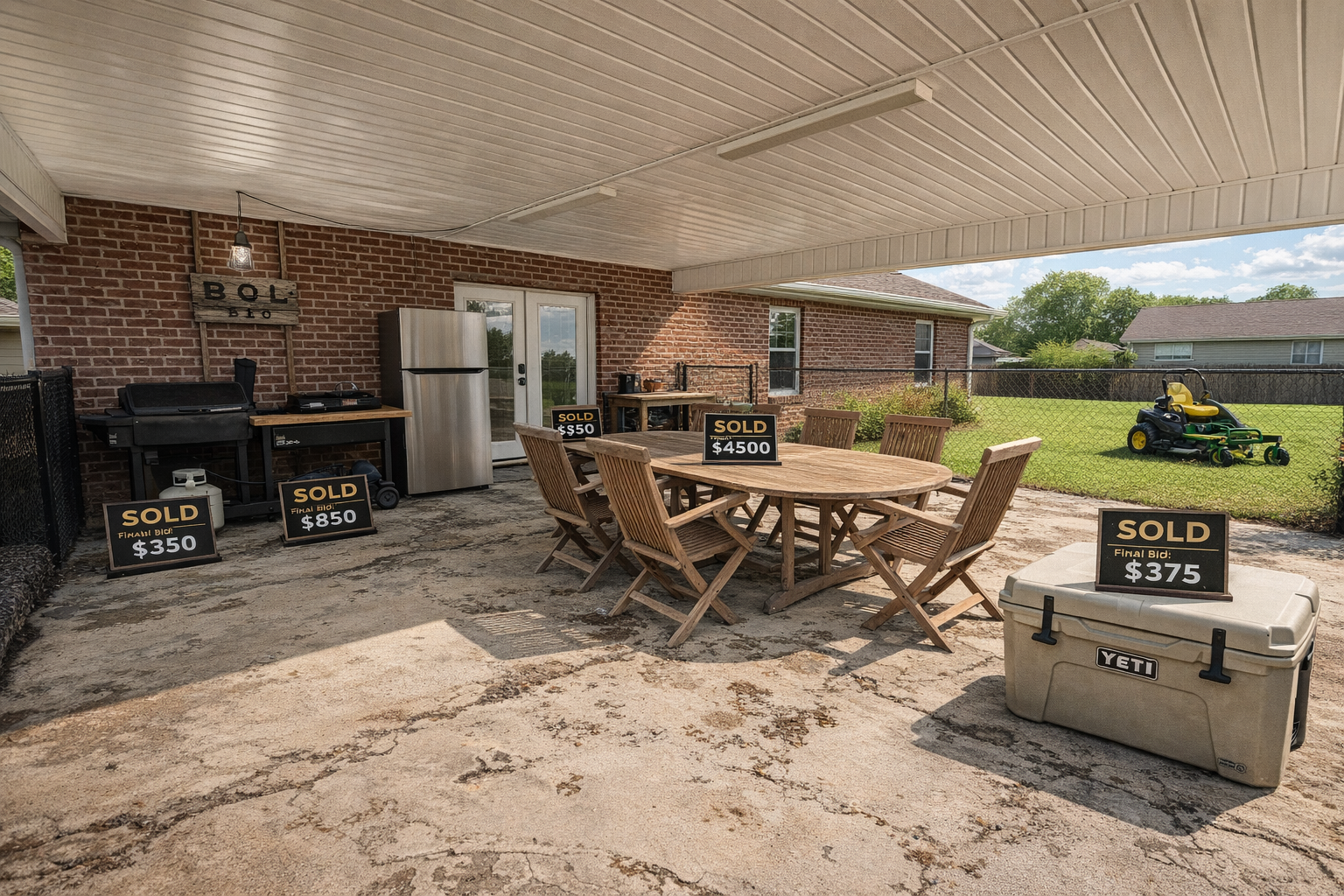
HOW OUR AUCTION SYSTEM WORKS
-
Yes. A 15% buyer’s premium applies to household and estate auctions; a 10% buyer’s premium applies to equipment auctions. This fee is paid by the buyer, not the seller, and supports marketing, platform costs, staffing, and secure sale operations.
-
Yes. We collect applicable parish and state sales tax unless the buyer is a registered, tax-exempt reseller.
-
Bidders must create an account and register with a government-issued ID and a valid credit card. The card is used as a security deposit only and is not charged if pickup occurs as scheduled.
-
Yes. Every auction includes a scheduled preview period. This is the only time bidders are allowed on-site prior to pickup. In addition, every lot is professionally photographed and cataloged online.
-
All bidding is online. Auctions use staggered close and soft close formats:
Staggered close means lots close one at a time, not all at once
Soft close means the clock extends if a bid is placed near closing, preventing last-second sniping
-
A maximum bid is the highest amount you are willing to pay. The system automatically increases your bid only when necessary to keep you in the lead, up to your set limit.
-
Winning bidders receive an email invoice after the auction closes. You can also view wins and invoices inside your bidder dashboard.
-
Credit card
Cash (in person)
Certified funds
-
Pickup is typically Saturday, following the auction, unless special arrangements are made. Buyers must bring their invoice. Third-party pickup is allowed with prior coordination.
-
Shipping is limited to select small items that fit USPS flat-rate boxes. Buyers are responsible for transportation and shipping arrangements. We do not ship oversized, fragile items, or restricted goods.
-
No. All sales are final. We strongly recommend attending preview or carefully reviewing photos and descriptions before bidding.
-
We start with a walk-through consultation. This allows us to:
Assess saleability
Align expectations
Recommend the best auction structure
There is no pressure. The goal is a quality outcome.
WHY AUCTIONS ARE A BETTER OPTION FOR ESTATES
-
Retail-style estate sales rely on guessed pricing. Items are marked high, then reduced day by day. This creates price confusion and often leaves money on the table.
An auction uses free-market pricing. Buyers compete. The market decides the value on that day.
-
When multiple buyers want the same item at the same time, competition increases value. Items with unclear or underestimated value often sell higher than they would in a fixed-price setting.
-
No. Fixed pricing is the risk. Two local estate companies can price the same item very differently. An auction removes that guesswork. The public sets the value transparently.
-
Every item is:
Cataloged
Photographed
Listed publicly online
Sellers can see their full estate in catalog form. Buyers see everything at once. This prevents valuable items from being overlooked or hidden.
-
Auctions give everyone an equal chance to participate. Retail sales reward whoever shows up first. Competition only happens when bidders are present at the same time.
-
Security is stronger with auctions. There is one controlled preview period. Retail sales can involve hundreds of people moving through a home over multiple days, increasing theft risk.
-
Yes. This is a core advantage.
We build lots to sell, not to display. Entire rooms, cabinets, or categories become grouped lots. Our target is $50 lots, and we add items until the lot makes sense.
Sealed consumables, grouped contents, and practical household items all have value in an auction. What a retail sale might consider trash often sells when grouped properly.
-
We do the cleanup on the front end. Trash and non-sellable items are removed before cataloging. When pickup is complete, the house is empty. Keys are returned. No leftovers.
Retail estate sales leave cleanup at the end—after unsold items remain. We reverse that process.
-
Sellers are paid within 30 days.
ESTATE, EQUIPMENT & BUSINESS LIQUIDATION SERVICES
-
Full household estates
Partial estates
Downsizing situations
Probate and executor-managed estates
If you have items to sell, our answer is usually yes.
-
Yes. We specialize in non-titled, serialized equipment such as:
Zero-turn mowers
Tractors
Commercial and industrial equipment
We do not sell titled vehicles.
-
Yes, on a limited basis (for the moment). Single items are incorporated into the best-fit auction to maximize exposure and value.
-
Yes. If you are exiting a business and want to avoid a drawn-out going-out-of-business sale, we can efficiently liquidate assets with a defined timeline and clear accounting.
-
That’s exactly why auctions work. A single buyer wants the lowest price. Multiple buyers competing determine true market value.
HOW TO GET IN TOUCH
How do I start?
Contact us to schedule a consultation. We will walk the property, answer questions, and explain exactly how we can help.